
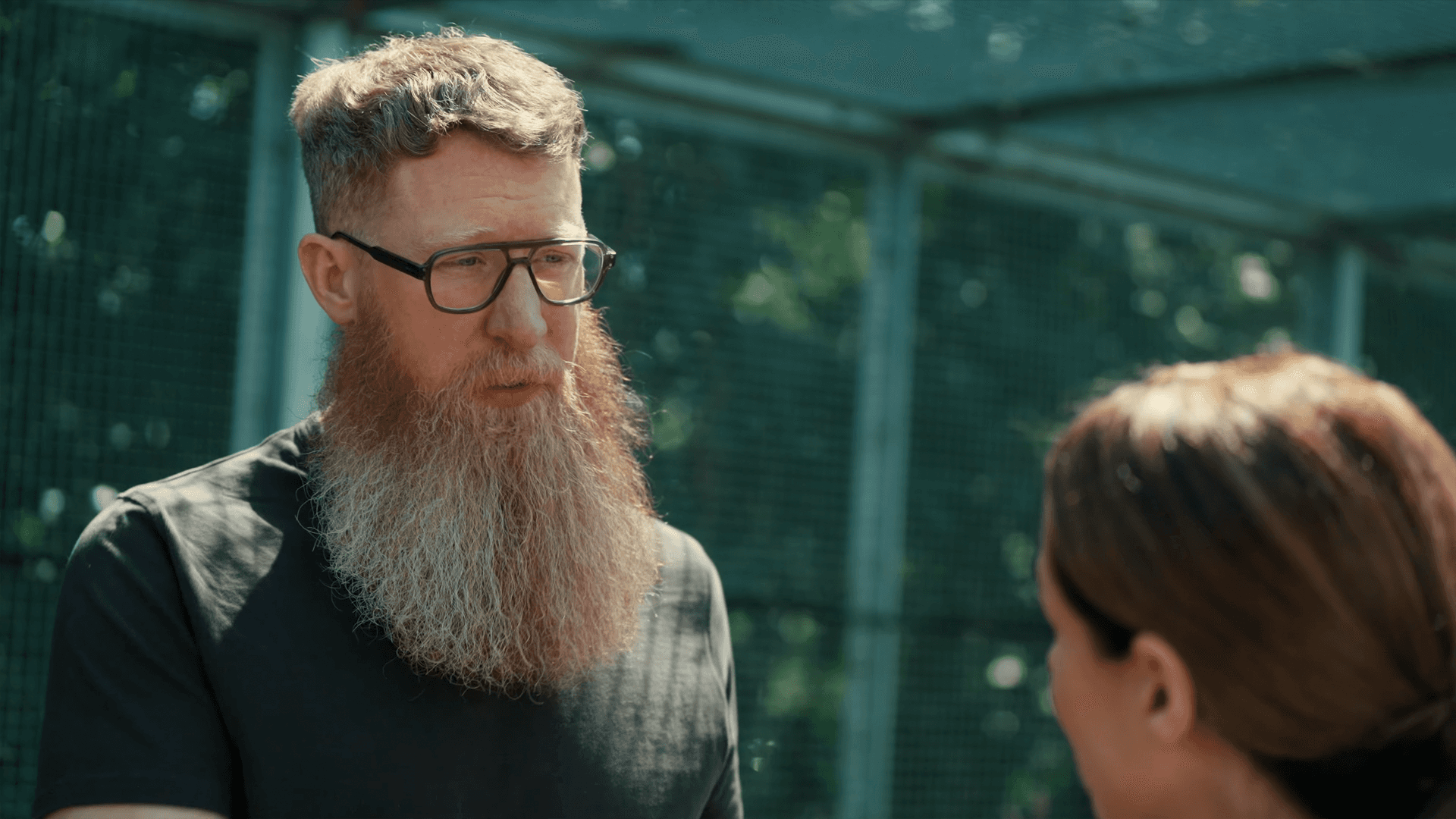
Microsoft spent a day filming with our Chief Product Officer, Tom Holden, on a community farm in East London. His segment appears in Language of Nature, a short film about how AI and cloud computing are helping people read the natural systems everything else depends on.
The film also visits the Met Office and the Avanade Intelligent Garden at Chelsea, so the company is good. We have set the video above to start at Tom's part, though the whole thing rewards a watch.
Why a lettuce bed and not a dashboard
The producers could have filmed Tom in front of a screen. They chose a vegetable bed, and the choice makes the argument better than a screen would have.
"The lettuce here belies the complexity of this incredible global food system that we all rely on," Tom says. "With over 70% of all the emissions of food actually here at the soil, in the fertiliser, the pesticide use, the irrigation, even down to the trucks that will move it to market, everything needs to be accounted for us to target our interventions and actually reduce the embedded emissions."
The film frames that as an environmental point, which it is. It is also a commercial one, and the commercial version is the reason our customers call us. The farm stage holds roughly 70% of a product's emissions. It also holds most of its cost volatility, most of its availability risk, and nearly all of the regulatory exposure arriving over the next three years. Yield, weather, water, soil condition and input prices all resolve at that end of the chain. They arrive at yours as a price increase, a short delivery or a range gap, usually with no warning and no explanation attached.
The cost of not seeing it coming
Most planning systems were built when the main uncertainty was demand. They forecast well, they replenish well, and they answer questions about what customers will buy. They were never designed for a world where the supply side moves as fast as the demand side does, and that gap now carries a price. Major disruptions arrive roughly every 3.7 years, faster than the two to three years most businesses need to recover from the last one, and in 2024 disruption cost businesses an average of 8% of annual revenues. Nearly one in five items in a typical UK weekly food shop is unavailable on shelf, and retailers lose around 46% of an intended purchase when a product is out of stock.
Both sides of the buying relationship feel this, differently.
For a retailer, the exposure sits in the assortment. A category plan built on last year's cost base and a supplier scorecard filed eleven months ago is a plan built on a version of the world that has already moved. The buyer finds out when the price increase request lands or the availability drops.
For a producer, the exposure hits the margin first and hardest. Input cost volatility reaches you well before a customer will accept a price change, and you walk into that negotiation holding your own cost base and the hope that it will be believed. Meanwhile the questionnaires keep coming, each in a different format, each asking for the same underlying information, and none of it returning as intelligence you can use in your own business.
Same supply chain. Two views of the same missing information.
Digital twins came out of doing the work properly
One exchange in the film explains our approach better than a sales deck could.
"Digital twins were almost a byproduct," Tom says. "If you're doing good quality lifecycle assessment, you need to be looking at every single transformation effect through the entire supply chain. What we are left with is a transformative data asset."
That ordering matters, and it is the reason the data holds up. We did not set out to build digital twins because the term tests well. We set out to calculate every product's impact accurately from farm to fork, and a living model of every product is what rigorous calculation leaves behind. It stays useful because it stays current, updating as sourcing, suppliers and conditions change rather than freezing the world at the moment a report was filed.
That model then answers commercial questions, not only environmental ones. What happens to the landed cost of this product if its main growing region has a second consecutive drought year. Which of our top twenty suppliers or ingredients carries the most concentrated climate risk. What a packaging regulation coming into force in eighteen months will cost across the range. Cost, carbon and compliance turn out to be three views of the same supply chain, and a team that can see all three at product level can act on all three at once.
None of this replaces the planning stack. It gives those systems the variable they have never had, which is an accurate, current, product-level picture of the supply side feeding them.
What Tom points at next
Tom closes his segment on what he calls multidimensional decision making. Cost, carbon, nutrition, availability and risk are one decision in practice, even where the org chart treats them as five. The businesses that can weigh them together, per product and per supplier, will move faster than the ones reconciling five spreadsheets after the event.
The film argues that nature has always been sending signals and technology is finally letting us read them. Our version of that argument is narrower and more commercial. The signals are already inside your supply chain data. Reading them early is now worth money.
Watch the full film above. Our report, Your Planning Tools Were Built for a World That No Longer Exists, sets out the commercial case in full, with editions for retailers and for producers.

Ian Piddock
Media Contact, Mondra
