Product-level emissions data is moving from a specialist sustainability request to a standard part of doing business in food.
Buyers ask suppliers for product carbon footprints
Tender teams need evidence behind environmental claims
Investors and certification bodies expect businesses to explain their impact with greater confidence
For many food companies, responding remains difficult.
A product carbon footprint often requires specialist software, consultancy support, lengthy data collection, or an enterprise technology project. This works for organisations with large sustainability teams and budgets. It works less well for mid-market manufacturers, growing brands, and foodservice businesses working from spreadsheets.
The result is a growing gap between the information the market requests and the ability of suppliers to provide it.
The problem with one-off footprints
Most businesses start by calculating the footprint of one product.
This helps answer an immediate customer request. It also creates a new problem. A single result says little about the wider product range.
When another customer asks about a different product, the business often starts again. Methodologies differ. Assumptions change. Data becomes difficult to compare. Reports also become outdated as recipes, suppliers, sourcing locations, and production volumes change.
Product carbon footprinting needs to become a repeatable business process.
Companies need a consistent method across their range. They need to update results when product data changes. They also need to understand where estimates have been used and where primary data would improve confidence.
This turns a carbon footprint from a static report into usable product data.

Good data starts with what businesses already have
Many food businesses lack a product lifecycle management system. Their product information sits in spreadsheets, specifications, recipes, packaging records, and supplier files. This should be a starting point rather than a barrier.
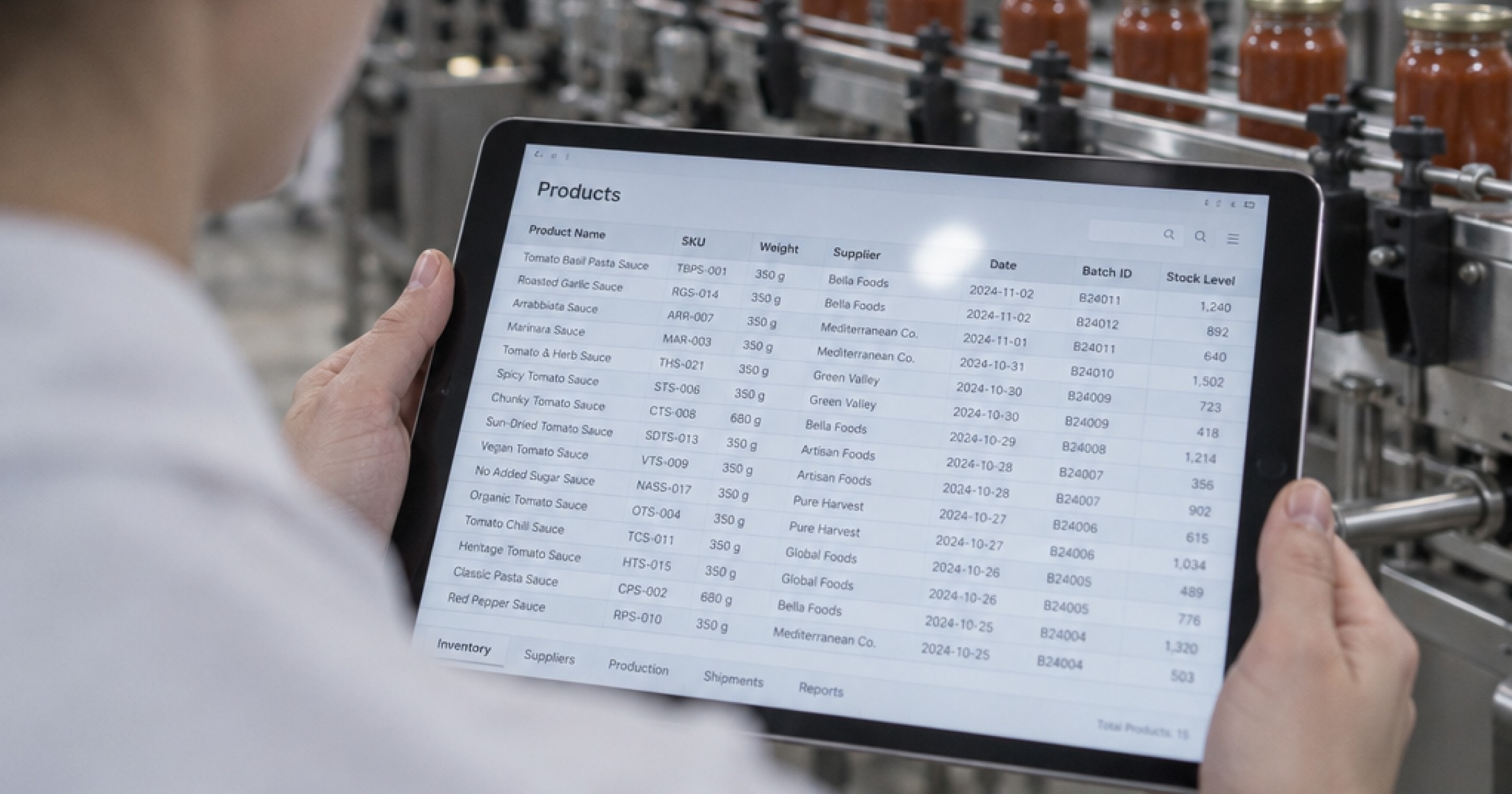
Product names, SKU numbers, suppliers, net weights, ingredients, manufacturing locations, and sales volumes already provide much of the structure needed for an initial calculation.
The level of detail determines the quality of the result. Basic product information provides a useful benchmark. Ingredient, sourcing, and operational data create a more specific view of the individual product.
Businesses then see where data gaps exist and where better supplier information will make the greatest difference.
Carbon is the starting point
A structured product dataset has value beyond emissions reporting.
The same ingredients, suppliers, sourcing locations, recipes, and sales volumes also shape commercial exposure.
A business might find heavy dependence on one ingredient, supplier, or region. It might identify products exposed to changing commodity prices, extreme weather, regulation, or supply disruption. It might compare alternative ingredients or sourcing options and assess their effect on cost, availability, and carbon.
This is why product carbon footprints matter beyond sustainability teams. They create a foundation for stronger sourcing, product development, risk, and resilience decisions.
Why Mondra is launching Mondra Lite
We believe access to credible product-level data should extend beyond large enterprises.
Mondra Lite is our response.
It gives food businesses a simpler route to product carbon footprints without a lengthy implementation project or PLM integration. Companies upload their product data and receive results through the same calculation engine and food-specific methodology used in Mondra’s enterprise platform.
We will launch with published pricing and an easy self-service sign-up that can have you up and running overnight. The service will be available on a pay-monthly or discounted annual package with pricing based on product volume.
Our aim is simple. More food businesses should be able to confidently respond to customer requests, minimise reporting effort, and understand the impact of their products.
The first step is a product carbon footprint. The longer-term value is a stronger product-data foundation for better commercial and supply-chain decisions.