After a packed few days at Sustainable Foods Conference 2026, one thing was clear. The sustainability conversation in food has shifted.
This year felt different.
Across panels, workshops and conversations on the floor, the tone was notably more optimistic, more practical and more focused on delivery. Less debate about whether change is needed, and far more discussion about how to make it happen, at scale, in a volatile operating environment.
For Mondra, attending as Resilience Partner, the event confirmed what we are already seeing across the market. Sustainability is no longer treated as a reporting function or a future ambition. It is becoming a core part of how food businesses think about risk, continuity, value and competitiveness.
Resilience moves to the centre
A dominant theme throughout Sustainable Foods 2026 was resilience.
Not resilience as a slogan, but resilience as an operating requirement. Climate volatility, supply disruption, nature impacts and cost pressure are no longer viewed as exceptional risks. They are becoming structural features of the food system.
Senior leaders spoke openly about the need to move beyond measuring emissions towards operationalising carbon and sustainability across the business. The organisations that adapt by building low-carbon, resilient supply chains are increasingly seen as the ones that will unlock long-term commercial advantage.
This perspective was echoed not just in sustainability sessions, but in broader leadership discussions, including contributions from executives at Tesco and Arla Foods. Sustainability and business strategy are no longer separate conversations. They are converging.
From targets to execution
Another clear shift was the move from ambition to action.
Across the event, speakers shared real-world examples of how collaboration between farmers, manufacturers and retailers is beginning to deliver both environmental and commercial outcomes. These were not abstract pilots. They were tangible interventions, underpinned by better data, shared infrastructure and more realistic operating models.
A recurring message was that sustainability data only creates value when it can be used. Used to inform sourcing decisions. Used to manage supplier performance. Used to respond when conditions change.
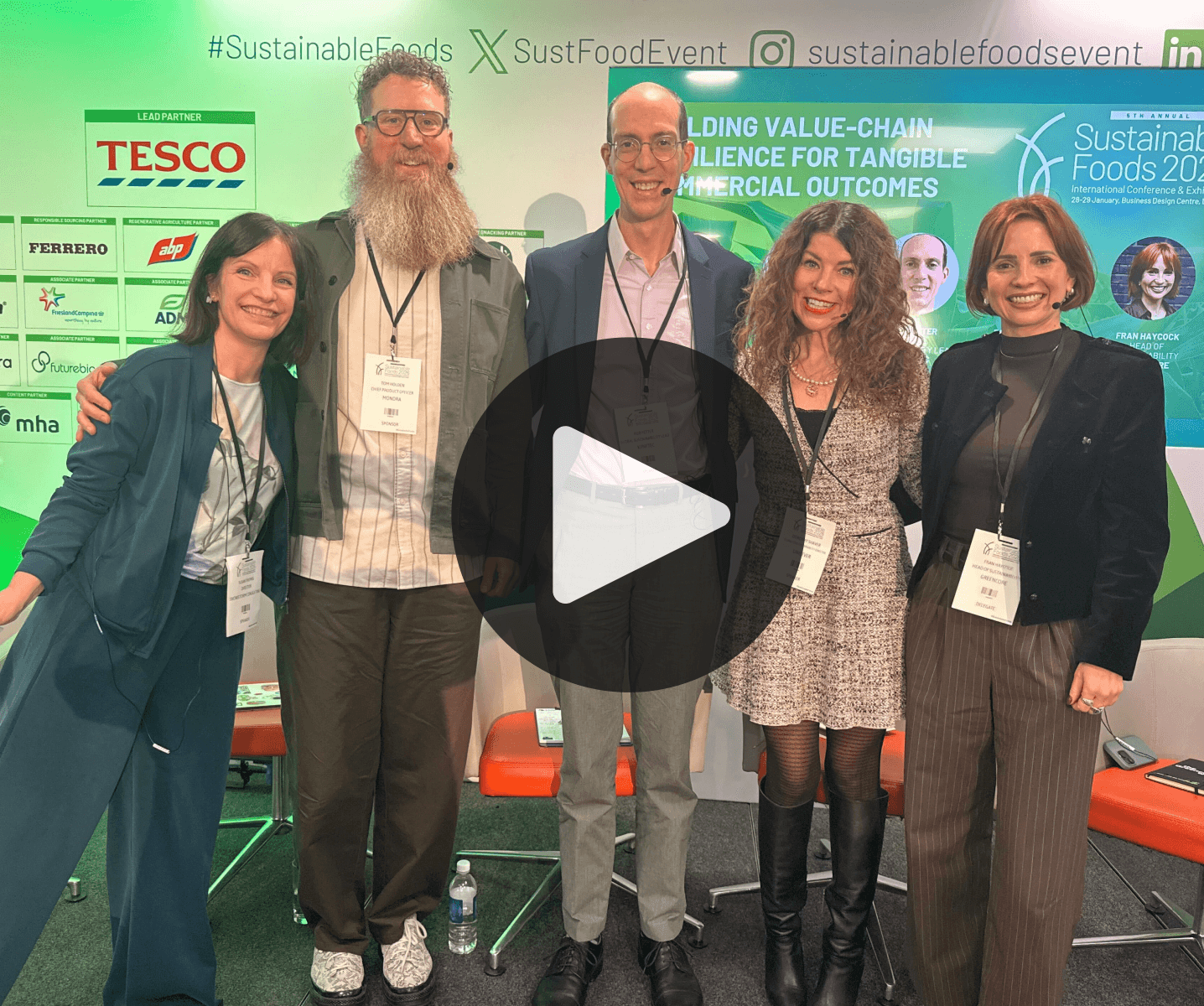
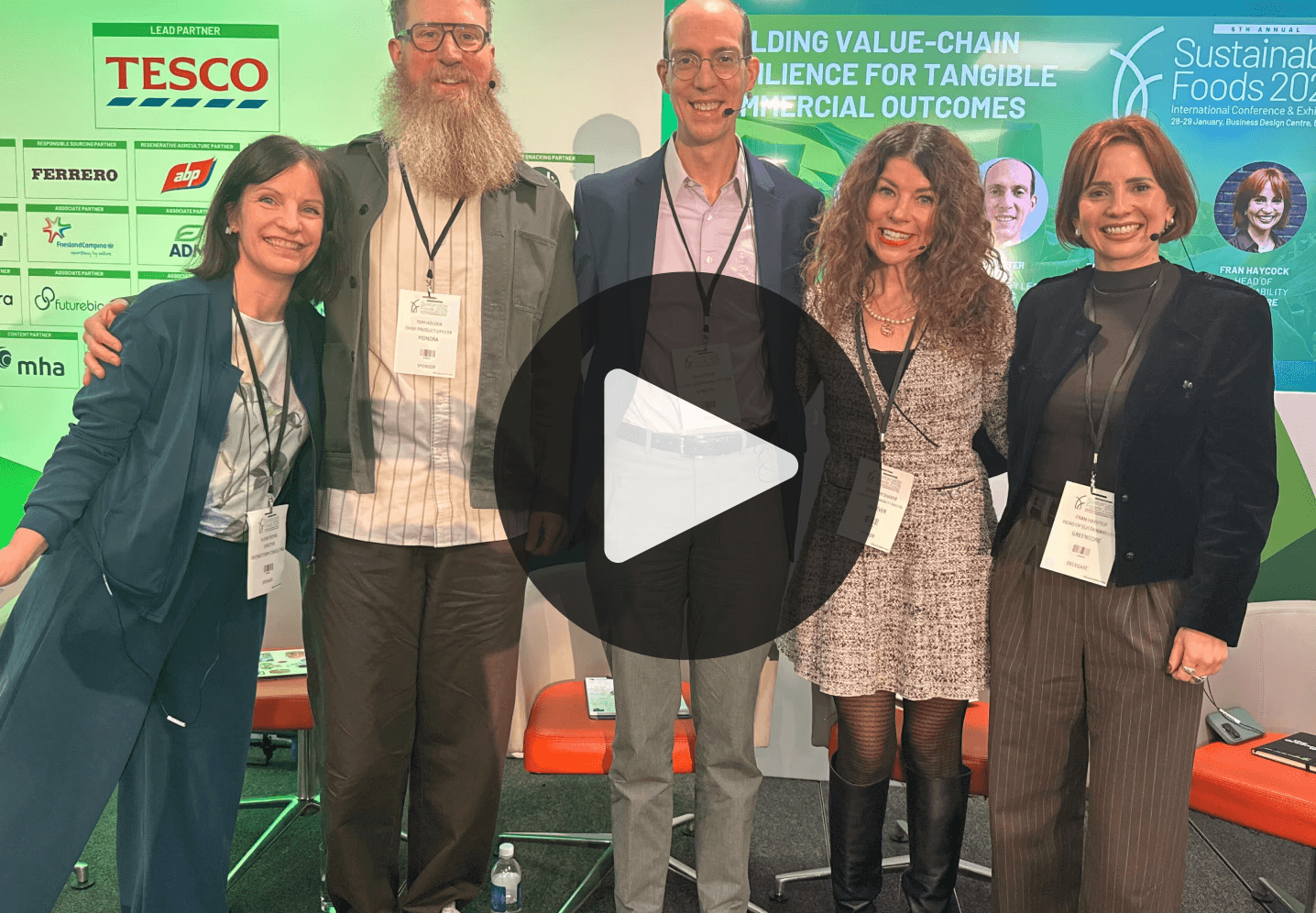
This was a theme that came through strongly in Mondra’s own panel session, Building value-chain resilience for tangible commercial outcomes, chaired by Susan Thomas, with insights from Dorothy Shaver (Unilever), Rob Fetter (Kynetec), Fran Haycock (Greencore) and Tom Holden (Mondra).
The discussion explored how resilience is built by linking farm and supplier performance to product outcomes and commercial decision making, rather than treating sustainability as a parallel reporting exercise.
Read more about this discussion and view a full recording of the session here.
Collaboration becomes real
Perhaps the most encouraging signal from Sustainable Foods 2026 was the maturity of collaboration on display.
There was widespread recognition that no single organisation can solve Scope 3 emissions, climate risk or supply chain resilience alone. Progress depends on shared data, aligned incentives and infrastructure that allows multiple parties to work from the same version of reality.
For Mondra, it was a proud moment to see real examples of this approach in action, including collaboration between retailers, manufacturers and suppliers that is already delivering measurable environmental and commercial outcomes.
Where Mondra fits
The conversations at Sustainable Foods 2026 reinforced Mondra’s belief that carbon is not just a number. It is an operating discipline.
Our role in the ecosystem is to help organisations turn sustainability data into decision-ready infrastructure. Infrastructure that supports resilience, protects margins and enables credible progress across the value chain as conditions evolve.
If this year’s event is any indication, the industry is ready to move forward together. From ambition to action. From reporting to resilience.
And from conversation to execution.